Reusability
Reusability is essential. A rocket that is single use is just as absurd as a single use airplane. - Elon Musk1
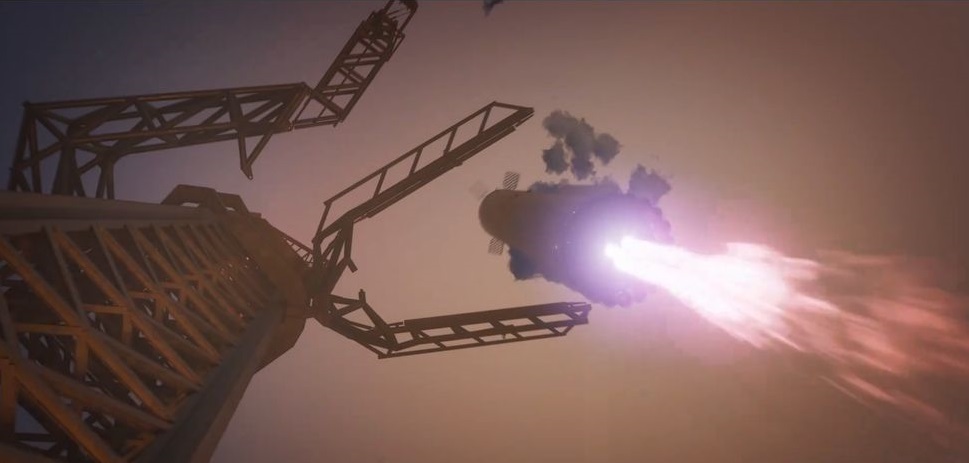
Virtical Landings
SpaceX
.jpg "Falcon 9 landing. Wikimedia Commons public domain") Vertical landings have been pivotal in enabling the rapid reusability of SpaceX's Falcon 9 rocket, significantly reducing launch costs and increasing flight cadence.
On December 21st, 2015, a Falcon 9 made history by achieving the first-ever vertical landing of an orbital-class rocket,
marking a major milestone in reusable launch technology. By recovering and refurbishing first-stage boosters, which constitute the most expensive part of the rocket,
SpaceX has been able to lower the cost of space access. As of April 2025, Falcon 9 boosters have successfully landed 291 times, demonstrating the effectiveness of this approach.
While this is impressive, the second stage is still expended, much greater savings would be acheived by a fully reusable system2.
Vertical landings have been pivotal in enabling the rapid reusability of SpaceX's Falcon 9 rocket, significantly reducing launch costs and increasing flight cadence.
On December 21st, 2015, a Falcon 9 made history by achieving the first-ever vertical landing of an orbital-class rocket,
marking a major milestone in reusable launch technology. By recovering and refurbishing first-stage boosters, which constitute the most expensive part of the rocket,
SpaceX has been able to lower the cost of space access. As of April 2025, Falcon 9 boosters have successfully landed 291 times, demonstrating the effectiveness of this approach.
While this is impressive, the second stage is still expended, much greater savings would be acheived by a fully reusable system2.
The Falcon 9 booster produces a sonic boom before slowing down to land. Here is a recording:
Royalty free attribution text: Sonic boom from Falcon 9 rocket landing by g0ggs -- https://freesound.org/s/668561/ -- License: Creative Commons 0
SpaceX is now scaling up the concept to the largest, most powerful rocket ever launched. Whimsicly named "Starship" it is designed for point-to-point, orbital, and inter-planetary transportation. While it is still in the developemental stages, the goal is full reusability.3
Blue Origin
.jpg "New Shepard Booster. Wikimedia Commons public domain") Blue Origin's New Shepard is a fully reusable suborbital rocket offering brief spaceflights using vertical landings4. Though limited to short missions, it laid the groundwork for New Glenn ...
a heavy-lift, partially reusable rocket that uses propulsive landings to lower launch costs. In January of 2025, New Glenn completed its first orbital mission,
with the goal of marking Blue Origin's leap into reusable orbital spaceflight.5 However, the first attempted landing of the first stage failed, which isn't a huge setback.
SpaceX failed to land the Falcon 9 four times befor being successful.6
Blue Origin's New Shepard is a fully reusable suborbital rocket offering brief spaceflights using vertical landings4. Though limited to short missions, it laid the groundwork for New Glenn ...
a heavy-lift, partially reusable rocket that uses propulsive landings to lower launch costs. In January of 2025, New Glenn completed its first orbital mission,
with the goal of marking Blue Origin's leap into reusable orbital spaceflight.5 However, the first attempted landing of the first stage failed, which isn't a huge setback.
SpaceX failed to land the Falcon 9 four times befor being successful.6
Horizontal Landings
Virgin Galactic
 Virgin Galactic made history with SpaceShipOne-the first fully reusable crewed spacecraft-which clinched the $10 million XPRIZE in 2004.
Building on that, they created SpaceShipTwo, a sleek spaceplane launched mid-air by a custom jet. Both stages take off and land on runways, and SpaceShipTwo's unique feathering system,
inspired by a shuttlecock, ensures a smooth and stable reentry from suborbital space7.
Virgin Galactic made history with SpaceShipOne-the first fully reusable crewed spacecraft-which clinched the $10 million XPRIZE in 2004.
Building on that, they created SpaceShipTwo, a sleek spaceplane launched mid-air by a custom jet. Both stages take off and land on runways, and SpaceShipTwo's unique feathering system,
inspired by a shuttlecock, ensures a smooth and stable reentry from suborbital space7.
Sierra Space
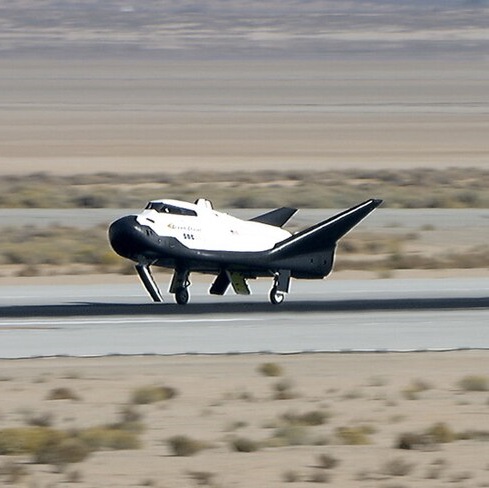 Sierra Space developed Dream Chaser. It's a reusable lifting-body spaceplane designed for up to 15 missions, offering runway landings for rapid turnaround and reduced refurbishment costs.
Unlike the Space Shuttle, which required extensive maintenance of its fragile silica-based heat tiles, Dream Chaser employs an advanced Thermal Protection System.
They developed it in collaboration with Oak Ridge National Laboratory. This system utilizes silicon-carbide-based composite tiles which are more durable and cost-effective,
maintaining their aerodynamic shape over multiple reentries8.
Sierra Space developed Dream Chaser. It's a reusable lifting-body spaceplane designed for up to 15 missions, offering runway landings for rapid turnaround and reduced refurbishment costs.
Unlike the Space Shuttle, which required extensive maintenance of its fragile silica-based heat tiles, Dream Chaser employs an advanced Thermal Protection System.
They developed it in collaboration with Oak Ridge National Laboratory. This system utilizes silicon-carbide-based composite tiles which are more durable and cost-effective,
maintaining their aerodynamic shape over multiple reentries8.
Cost-based reusability
United Launch Alliance
Though not yet demonstrated, ULA plans to implement what CEO Tory Bruno calls "smart reusability" on its Vulcan Centaur rocket. The concept focuses on recovering only the most expensive part (the engines) using an inflatable heat shield called LOFTID, while discarding the rest of the rocket9.
References
- https//www.facebook.com/spacextechnologies/posts/reusability-is-essential-a-rocket-that-is-single-use-is-just-as-absurd-as-a-sing/870408431973682
- https://www.spacex.com/vehicles/falcon-9
- https://www.spacex.com/vehicles/starship
- https://www.houstonchronicle.com/news/houston-texas/space/article/katy-perry-gayle-king-blue-origin-space-20191672.php
- https://www.digitaltrends.com/space/blue-origin-shows-off-landing-mechanism-for-new-glenn-rocket
- https://en.wikipedia.org/wiki/Falcon_9_first-stage_landing_tests
- https://www.virgingalactic.com/#featured
- https://www.sierraspace.com
- https://www.youtube.com/watch?v=Z87CK2mdlNc